We hear a lot about the importance of good habits. There are books, articles, podcasts, and no shortage of advice on how to make something automatic, so that eventually we do it without deciding to each time. But I have found that, especially as a working mom in a profession that is anything but predictable, I rely less on things happening automatically and more on building routines. I intentionally make room for the things I know I need to do.
I was reminded of the difference this summer. Writing this blog had become part of my routine, until we spent the season traveling and trying to work from wherever we were. First I missed a week. Then another. Before I knew it, more than two months had passed since I had posted anything. It made me think about how much work it takes to build a routine compared with how little it takes to lose one.
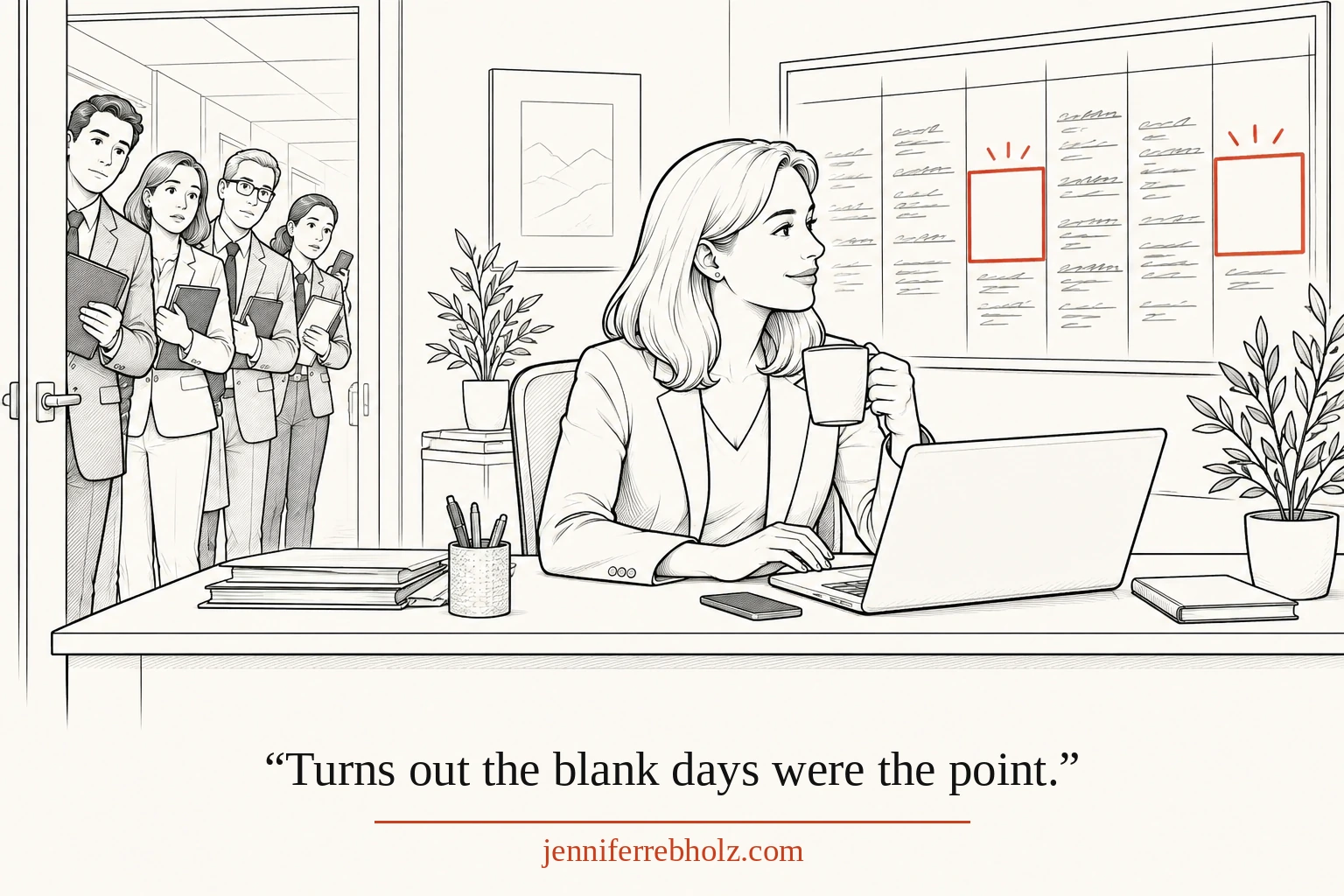
For me, it usually starts with my calendar. One of the best routines I learned as a young lawyer was to keep “hold days.” Ideally two a week, these are days when I try not to schedule anything. No depositions, no meetings, no calls. The days are held so I can actually do the work. When I was younger, this seemed strange. I liked having things on my calendar. A deposition or a hearing made the day feel important. An empty day did not.
Then I started handling more of my own cases, and I learned quickly that if every day is full of depositions, hearings, and phone calls, there is no time left to think about the cases themselves. You need time to draft discovery, review what you received, prepare motions, evaluate evidence, and, maybe most importantly, sit with a case long enough to think about where it is going and what it needs next. Those hold days became some of the most valuable time I have.
If every day is full of hearings and calls, there is no time left to think about the cases themselves.
Another routine I developed was looking ahead. At the start and end of each week, I spend time on what is coming. What hearings do I have? What deadlines are close? Is there something on Monday that means I need to work over the weekend? That last question has gotten more complicated over the years. When I was younger, the weekend was mine. Now I have a husband and two kids, and somehow our weekends can feel more scheduled than our weekdays. If I know I need a few hours to prepare for Monday, I have to figure out where those hours will actually come from. Looking ahead lets me do that, instead of discovering at eight o’clock Sunday night that I still have three hours of work left.
None of these routines is complicated. But they make the unpredictability of litigation and life a little more manageable. The problem is that routines, like habits, are easy to lose. You miss a hold day because something urgent comes up. The next week you schedule over it again. Soon you look up and realize you have not had a day without meetings in a month.
There will always be weeks when the routine does not hold. Litigation does not care about the schedule you carefully built, and neither do sick kids or family emergencies. The goal is not to follow a routine perfectly. It is to notice when you have drifted from the routines that help you, and to decide to come back to them.
The goal isn’t to follow a routine perfectly. It’s to notice when you’ve drifted and choose to return.
This is not just about work. Maybe you want to block time each day to return calls and emails instead of answering them constantly. Maybe you want to exercise three mornings a week. Maybe there is a friend you keep meaning to call. Put it on the calendar. It can feel strange to schedule something as simple as calling a friend, but life has a way of filling every empty space we leave it.
So as I work on getting back into my routines, this blog included, I am trying to remember that falling out of a habit does not mean you failed at it. Sometimes you just have to put it back on the calendar and begin again.