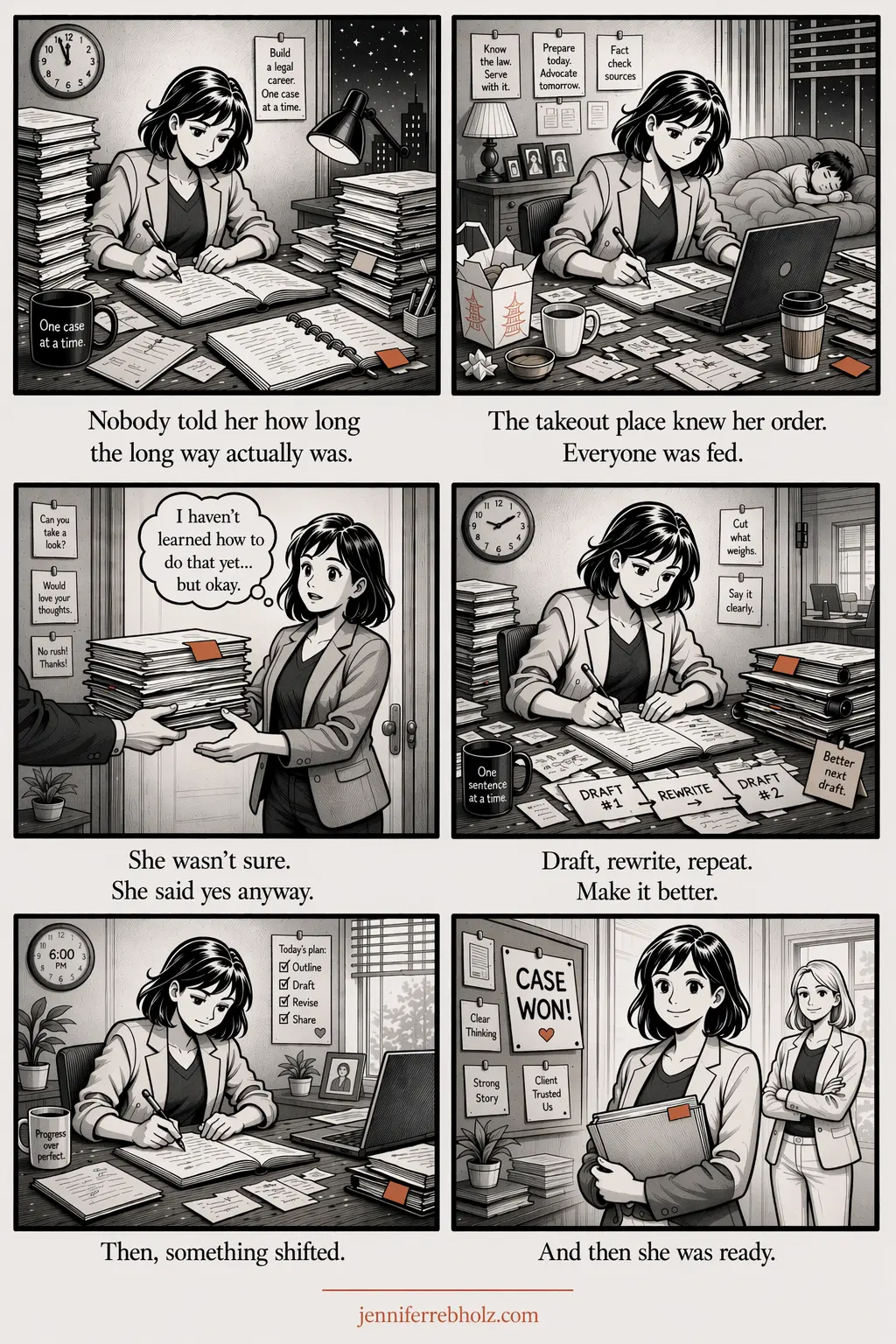
I just spent four days at a conference with a group of incredible women trial lawyers. Most of us have been practicing for well over 15 years. We came from different paths, different firms, different life circumstances. Some are partners, some are leaders in bar organizations, some sit on the bench. But as we talked about how we got here, there was a common thread that ran through every story. We put in the work.
Not just the expected work. Not just what was assigned. But the extra time, especially in the beginning, when everything was new and nothing came easily. We worked hard in law school, and then we worked even harder once we started practicing. We said yes to opportunities, even when we weren't sure we were ready. We volunteered to help because that was how you learned. We stayed late, we asked questions, we figured it out the long way. We put in the time.
And if I'm being honest, that kind of message isn't always the most popular one right now. We talk a lot, and rightfully so, about balance. About setting boundaries. About protecting time for the things and people we love. Those conversations matter. But there is also a truth that is harder to say out loud: early on, the balance doesn't always feel equal.
There were stories at that conference that made all of us laugh and wince at the same time. Kids curled up in offices on makeshift beds because they were sick but there was still work that had to get done. The takeout place that knew your order because cooking just wasn't happening that week. The quiet acknowledgment that, for a period of time, work demanded more. Not forever. But at the beginning, it often does.
The long way is the point
Learning how to be a litigator, really learning it, takes time. It takes repetition. It takes doing things the long way before you earn the ability to do them efficiently. What do I mean by that?
I mean drafting the pleading yourself, not just relying on a form. Taking the time to read the rules that support it so you understand why each section is there. Writing discovery requests from scratch so you learn what you're actually trying to uncover. Thinking through deposition questions instead of just pulling from an old outline.
Yes, there are templates. Yes, there are tools. Yes, there is now technology that can generate a first draft of almost anything in seconds. And those things have their place. They can make you faster. They can make you more efficient. But they don't replace learning.
They don't teach you the “why” behind what we do, why a pleading is structured a certain way, why a question is asked in a particular order, or why a certain argument resonates. That only comes from repetition. From practice. Just like anything else you want to be good at.
You become someone who can lead because you prepared for it long before anyone was watching.
When the basics become automatic
At some point, if you put in that time, something shifts. The basics become automatic. You don't have to think about how to structure a response or what comes next in the process. And because those foundational pieces are second nature, you can focus on what really matters: the strategy, the nuance, and the persuasion.
But you only get there by doing the work first. By putting in the time when it's hard, when it feels like more than you expected and when the balance feels a little off. Because over time, that investment pays off. The long hours early on create space later for better judgment, for more confidence, and yes, for a more sustainable balance.
It may not feel perfect in the moment, but it is what shapes you into a strong person, a person who doesn't just show up, but who is ready when it matters. You become someone who can lead because you prepared for it long before anyone was watching.