One of the things that nobody really explains when you first become a lawyer is how much of your career is built on your reputation. Not just whether you win or lose. Not how aggressive your emails sound. Not how many motions you file. Your actual reputation. Are you someone people trust? Are you someone who is fair? Are you someone who will advocate hard for your client while still acting like a professional?
Those things matter more than many young lawyers realize.
One of the places where this comes up most often is discovery and requests for extensions of deadlines. We have all been there. A deadline is approaching and you get the inevitable email or call from opposing counsel asking for more time. Maybe your client really wants the case moving forward. Maybe opposing counsel has been difficult to deal with. Maybe this is not the first extension request. So what do you do?
In Arizona, the Lawyer’s Creed of Professionalism actually gives us guidance. The creed says lawyers should agree to reasonable requests for extensions of time when the substantive rights of the client are not adversely affected. In other words, most of the time, if granting the extension is not going to prejudice your client, you should probably work with the other side.
That does not mean you stop being an advocate. It does not mean you let cases drag on endlessly or ignore deadlines. It means you recognize that professionalism and effective advocacy can exist at the same time. In fact, the best lawyers I know are usually the ones who manage to do both well.
Pick up the phone and talk to opposing counsel.
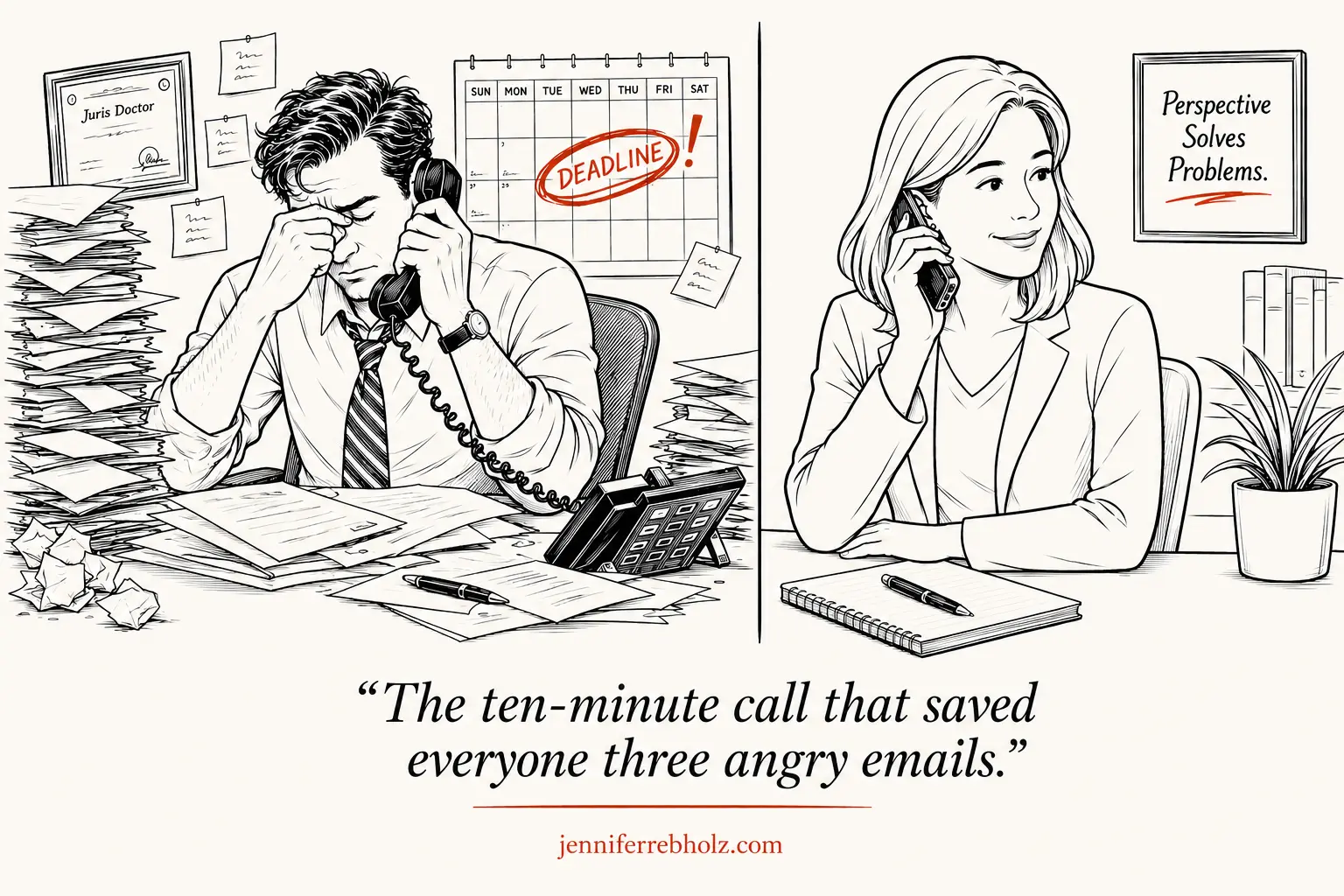
The easiest way to figure out whether an extension request is reasonable is usually the simplest: pick up the phone and talk to opposing counsel. Find out what is going on. Sometimes there is a scheduling conflict. Sometimes there is a family issue. Sometimes another case blew up and took priority. Sometimes they simply missed the deadline. Whatever the reason, have the conversation. Ask how much time they actually need. Talk through whether the extension impacts upcoming deadlines or hearings. Most of these issues can be resolved in a ten-minute conversation instead of three angry emails and a motion practice nobody wants to deal with.
Part of becoming a good litigator is learning that every issue does not need to become a battle. You can be tough without being impossible. You can hold people accountable while still being reasonable. And over time, people remember that.
Lawyers talk. Judges notice. Court staff notice. Opposing counsel notice. If you build a reputation as someone who is fair, straightforward, and professional, your life becomes much easier. People trust your word. They know that when you agree to something, you mean it. They know that when you push back or say no, there is probably a legitimate reason for it. That credibility matters.
It also makes cases move more efficiently. Discovery disputes become less personal. Meet and confers become actual conversations instead of performative arguments. And when you do have to go in front of the judge, your reputation for being reasonable helps. Judges spend all day dealing with unnecessary fighting between lawyers. The attorneys who stand out are often the ones who can advocate strongly without creating unnecessary conflict.
You can be tough without being impossible.
Of course, there are times when the answer to an extension request has to be no. If a case has already been repeatedly delayed, there comes a point where fairness to your client requires the matter to move forward. There are also situations where granting an extension would create actual prejudice to your client. But even then, professionalism matters. Talk to opposing counsel. Explain your position. Explain why this request is different. If you have built your reputation as someone willing to work with people when appropriate, those conversations are usually far less contentious.
This profession is adversarial by nature, but that does not mean we have to treat each other badly. Most of the time there is no grand strategy behind a request for an extension. Life happens. Calendars get overloaded. Emergencies come up. Someday you will be the lawyer asking for more time too.
Be the attorney people feel comfortable calling. Be the attorney who works hard, expects the other side to work hard, but is still fair in the process. Build the kind of reputation where people know you will fight for your client while still acting with professionalism and integrity.
Not only will it make you a better lawyer, it will make this career a lot more enjoyable.