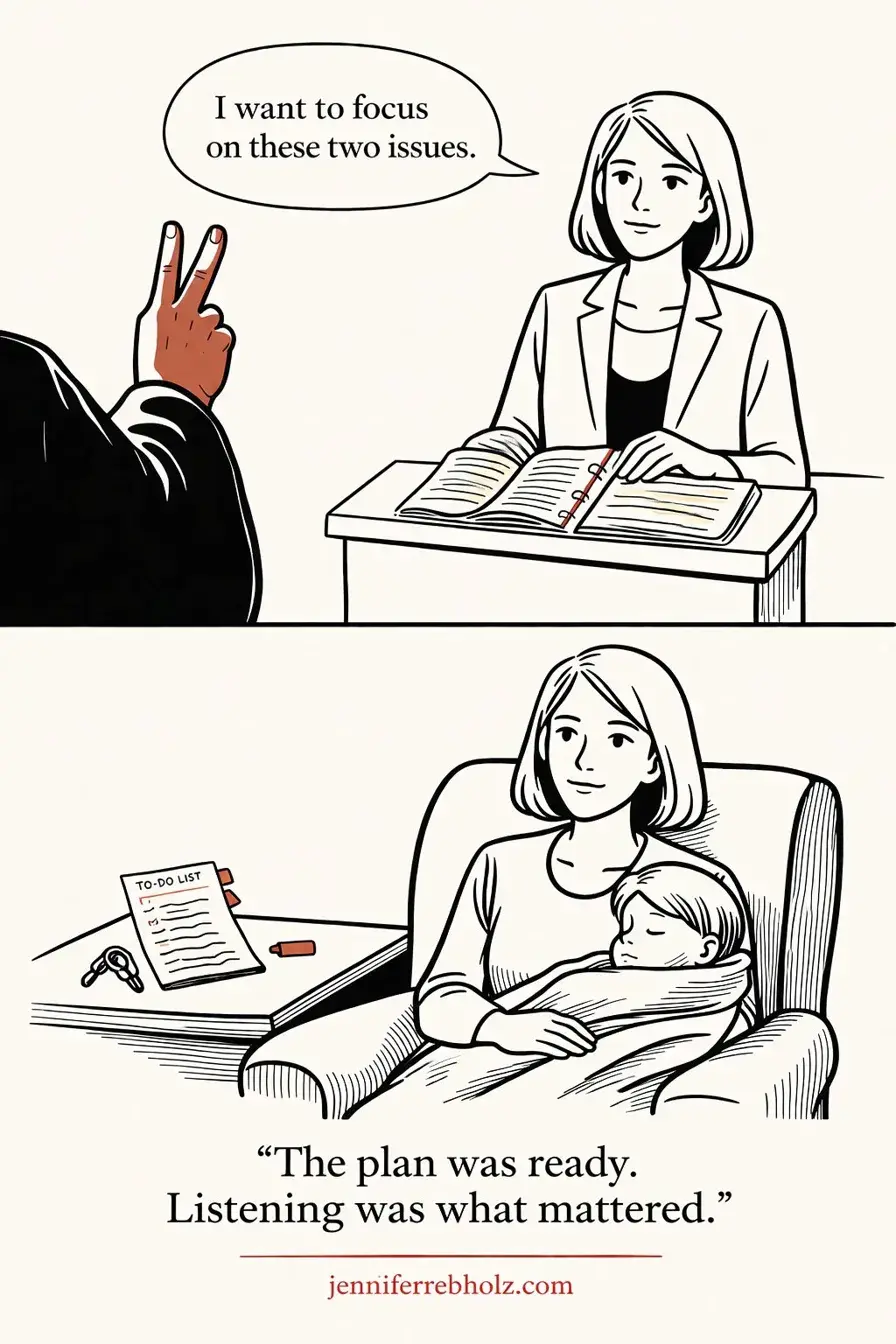
Listening, really listening, is a skill. Not the kind we list on a résumé, but the kind that shows up in the moments that matter most, at home and even in the courtroom.
Those of us who identify as Type A, the planners, the doers, and list-makers, are especially prone to mistaking preparation for certainty. We map out the day. We script the argument. We know exactly how things should go. And often, that preparation serves us well. It's part of what makes us effective advocates, leaders, and, frankly, forces to be reckoned with.
But here's the harder truth: just because we planned it doesn't mean it's right. This weekend reminded me of that.
We had a full schedule; errands, commitments, and a playdate my daughter had been looking forward to. As I came in from running around, I called out to my daughter to get ready. That's when I noticed she was napping. Unusual, but I brushed it off. We had a plan. A good plan. A plan for her.
So I woke her up and pushed forward. As she struggled and fussed, I felt my frustration rise. I was trying to do something nice, get her to her friend's house on time, and she just wasn't cooperating. It took me longer than it should have, but eventually I paused and asked, "What's going on? Don't you want to see your friend?"
Tears in her eyes, she said she did but she didn't feel well. She had been trying to tell me that the whole time. I just wasn't listening.
I finally heard her and I let go of the plan. We canceled. I apologized. And instead of rushing out the door, we sat together in a chair, wrapped in a blanket, and rested. It was exactly what she needed. And, if I'm being honest, probably what I needed too.
I see the same dynamic play out in court. When I have oral argument, I prepare. Thoroughly. I review every motion, every response. I outline my points, refine my arguments, and anticipate counterarguments. By the time I walk into court or log onto Zoom, I am ready. I know exactly what I plan to say. I have mapped it out. I have a plan.
And then the judge says, "I've read everything. I want to focus on these two issues."
That's the moment. Do you stick to your script? Or do you listen?
In court, if the judge is telling you what matters, you listen. You meet the moment. Because no matter how polished your other arguments are, they don't matter if you're not addressing what the decision-maker cares about.
That's the moment. Do you stick to your script? Or do you listen?
At home, if your child is telling you something, even quietly, even imperfectly, you listen. Because no matter how well-intentioned your plan is, it doesn't matter if it's not what they need.
This isn't an argument against planning. Planning is still essential. It's how we manage careers, families, and everything in between. It's part of what allows us to do as much as we do, as well as we do it.
But the real strength, the kind that doesn't always get talked about, is in knowing when to pivot. To pause. To hear. To adjust.
Because sometimes the most important thing you can do isn't to execute the plan, it's to listen closely enough to know when to change it.