Figuring out how to build a career as a female litigator wasn't something that came with a roadmap. When I graduated, there were plenty of women in my class and plenty who passed the bar. But far fewer seemed drawn to litigation, and even fewer stayed. Early on, I understood that this path can feel like you are stepping into rooms where you are not quite expected.
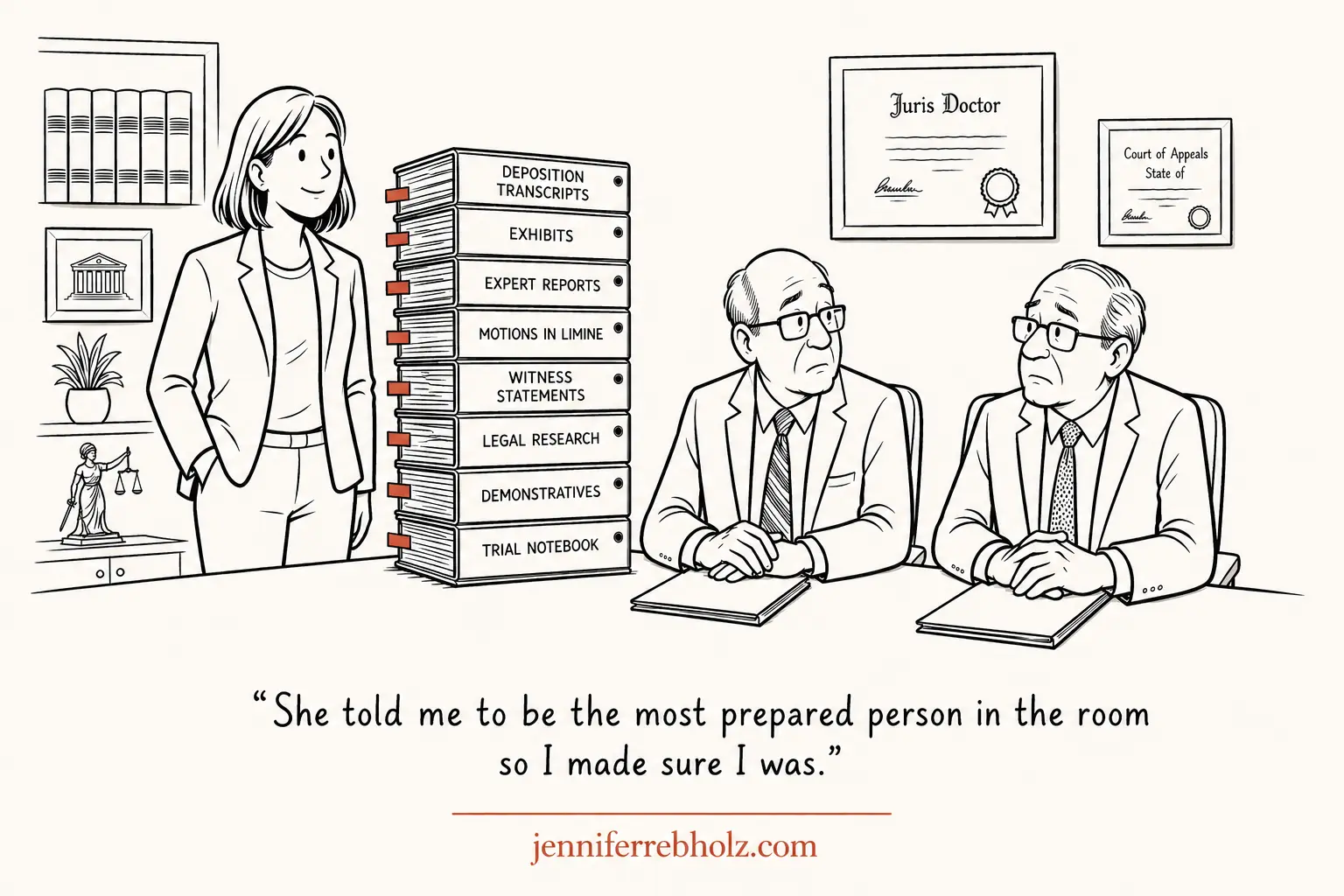
I was fortunate that my first supervising attorney was a woman. She was a strong litigator and an even stronger mentor. One of the first things she told me stuck: you are young, you are a woman, and you are small, so if you want to be taken seriously in litigation, you will need to be more prepared than anyone else in the room.
It wasn't a soft message. And it wasn't entirely fair. But it was honest. And over time, I realized it was also incredibly useful. So that became my approach. If I wasn't going to be the most experienced person in the room or even the smartest in the room, I was going to be the most prepared.
I read everything. Not summaries. Not excerpts. Everything.
Learning the work in real time
Like most young lawyers, I quickly learned that law school gives you a foundation, but not a full understanding of how to actually practice. Drafting pleadings, building a case, thinking through how one document connects to the next, that all had to be learned in real time. I stopped just trying to get things done and started trying to understand why we were doing them. How the initial case evaluation shapes the pleadings. How those pleadings evolve into disclosures. How each piece builds toward the story you eventually tell at trial.
And I read everything. Not summaries. Not excerpts. Everything.
It still surprises me how often people don't. When you take the time to actually read the documents, to understand what the evidence really says, something shifts. You're no longer reacting, you're anticipating. You're not just following a plan, you're able to adjust it. You can stand up in a deposition or a hearing and respond in the moment because you know the case, not just your outline. That kind of preparation doesn't just make you better. It makes you more confident. And over time, people notice.
The other piece that matters just as much
But preparation alone isn't enough to sustain you in this career. The other piece that matters just as much is your support system. This job is hard. There are long days, tough losses, and moments where you will question whether you got it right. Having people you can call after a bad ruling, or after a day where nothing went the way you planned, is essential. Just as important are the people who celebrate the wins with you, who understand what it took to get there.
Early in my career, I found that support through young lawyer groups. People who were going through the same growing pains at the same time. We compared notes, shared frustrations, and, more often than not, reassured each other that we were not the only ones figuring it out as we went. Your group might look different. It might be colleagues, friends from law school, family, or a mix of all of them. What matters is that you have people who know you beyond your cases and remind you of who you are outside of them. Because if you are not careful, it is very easy in this profession to give everything to the work and let those relationships slip. And you can't do this alone.
If I had to distill it down, navigating a career in litigation as a woman came down to two things for me: do the work so you walk into every room prepared, and build a circle of people who help you stay steady once you walk back out. Neither of those things makes the path easy. But together, they make it possible.